

about us
Creating a reconnection to language, land, and culture for our children and children yet unborn.
We believe in building a future that respects our connection to the land, air and sea, firmly rooted in our responsibility of stewardship, while building a robust and prosperous economy. We acknowledge and prioritize the role of our environment as a critical foundation for serving the physical, emotional, mental, spiritual and economic needs of our people. Our vision is to reassert our presence on our territory, hold our traditional stewardship roles of our lands, and reconnect to our culture and language.
Our communities have experienced waves of generational trauma that have left lasting impacts. We believe now is the time for healing, to reconnect to our language and land. Healing for Kwakwa̱ka̱ʼwakw youth begins with a reconnection to our language and pride in our cultural heritage.
Nawalakw will serve as a catalyst for social change and become the first place on earth where Kwak’wala is again spoken fluently by everyone.
about our vision

Nawalakw means “supernatural” in Kwak̓wala — click the button for the pronunciation (redirect to FirstVoices)
Nawalakw is an Indigenous-led charitable organization located in the heart of the traditional and unceded territory of the Ḵwiḵwa̱sut̓inux̱w people, one of the four tribes of the Musǥa̱makw Dzawada̱ʼenux̱w, in one of the richest and most diverse biospheres on earth.
Nawalakw brings together youth and elders, providing traditional teachings in all aspects of the Kwakwa̱ka̱’wakw culture and environmental stewardship, as part of a community-led, land-based healing initiative.
In its multi-phase approach, Nawalakw will create a presence and environmental stewardship in our traditional territory, continue language immersion programming, support traditional healing programs deeply guided by the values, voices, and vision of the Kwakwa̱ka̱ʼwakw people.
Nawalakw and related businesses will employ over 100 people from local villages and the surrounding Kwakwa̱ka̱ʼwakw territory, while protecting the biodiversity of this sacred place.
now is the time
Nawalakw has a vision for a cultural and economic transformation that will resonate through the next 500 years.
our phased approach

Nawalakw Culture Camp and Community Programming


Construction of hi’ma̱nis ḵ̓aḵ̓ut̓ła̱’at̓si, the language and culture facility was completed in spring 2021. The 2400 sq. ft solar-powered camp has the capacity to host up to 24 students, along with teachers and support staff, this beautiful space has become a hub for cultural revitalization. Since opening, hundreds of youth, Elders, and community members have gathered at Hada to participate in week-long language immersion camps.
To expand capacity, tiny houses were added in 2023, allowing us to welcome even more visitors for programs and special events. The facility continues to support a wide range of language and cultural programming for our communities and school groups.
Our robust language program is at the heart of this work. With guidance from Elders and fluent speakers, language apprentices learn daily, create lessons, and help carry forward a vital cycle of mentorship and knowledge sharing. Together, we are reclaiming and reawakening our rich language.
We have established a thriving 2.5 acre community farm that grows and distributes thousands of pounds of food each year. This supports both local communities and programming at Hada, while advancing our goals of food sovereignty and security.
Through training and capacity-building programs, we continue to enrich the lives of the people we serve—nurturing knowledge, connection, and resilience for generations to come.

Healing Village and Sustainable Destination Development
Our purpose is to be a force for good, to support our thriving community and protect the lands of our ancestors for generations to come. In this spirit, our programs will provide healing and wellness for our people and our lands in a sustainable way.
The second development phase will expand in a separate site to include a main lodge, individual cabins, wellness centre, outdoor facilities, an interpretive centre and a healing village. These facilities will be designed to provide language, training and certification programs, and adult healing and wellness programs in partnership with Kwakwa̱ka̱’wakw communities and BC First Nations Health Authority.
To support ongoing and expanded language and healing programming, we will welcome and connect visitors to this supernatural territory by sharing our stories, our challenges, our efforts – and of course – our culture. To us the most important part of this journey is an immersive experience, by keeping things simple, authentic and enriching. Our supernatural lands create space for day-to-day concerns to fade into the background, bring perspective, and shift our values.

Nawalakw Interpretive Centre
An interpretive centre, retail space and gallery showcasing local artists, and housing for those doing land stewardship programs at Nawalakw are part of our long-term plans.
Visit Friends of Nawalakw for more information about direct financial ways to support our vision.
our team

K’odi Nelson, EXECUTIVE DIRECTOR
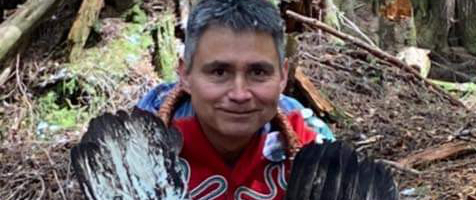
K’odi holds a seat in the ancient traditional governance system of the Musǥa̱makw Dzawada̱ʼenux̱w and the visionary and founder of Nawalakw.
Recognizing the role of our environment as a critical foundation for serving the physical, emotional, mental, spiritual and economic needs of all people, K’odi believes that deep healing for Kwakwa̱ka̱ʼwakw people begins with a reconnection to their land, their language and their cultural heritage. His vision is that kwak’wala will once again be spoken fluently by youth and elders alike.
The multi-phase project includes a language and culture camp, training and capacity-building programs, and food sovereignty with a 2.5 acre farm that supplies healthy and sustainable foods grown and harvested locally. A world-class tourism destination (in development) will generate opportunities for employment throughout the territory and sustainable revenue to fund programming.
The first phase, the Nawalakw Language & Culture Camp opened in July 2022 and has been welcoming youth and community participants to culture camps year-round. The 2400 square foot solar-powered facility has the capacity for 24 students, teachers and support staff for cultural and language revitalization programs, while protecting the biodiversity of this sacred place, and ensuring its legacy lives on for generations to come.
Prior to founding Nawalakw, K’odi was lead tour guide for Sea Wolf adventures, an Indigenous-owned adventure tour operator and the culture and language teacher at the Gwa’sala Nakwaxda’xw school.
He resides in ‘Ya̱lis, Alert Bay, with his wife Alisha and their two sons Dallas and Zayden, whose unwavering support make this all possible.
“The first Nations people have endured successive waves of traumatic disruption that have threatened our very existence. My hope and dream is that Nawalakw will serve as a catalyst for social change and become the first place on earth where the kwak̓wala language is again spoken immersively.”
Joseph Isaac, SR. ADVISOR, GOVERNANCE & FINANCE

BIO COMING SOON
Deanna Nicolson, LANGUAGE PROGRAMS, PROGRAM COORDINATOR

Ikawegi’lakw (Deanna Nicolson, nee Barnes) is our Language Program Director at Nawalakw. Her paternal roots are from Scotland, Fort Rupert and Alert Bay (Barnes, Hunt and Cook families) and her maternal roots are from Village Island, Alert Bay and Musgamakw Dzawada’enuxw territories (Beans, Alfred, Dawson and Coon families). She was born in Vancouver and grew up in Alert Bay, moving away to pursue post-secondary education in Victoria, BC. She earned business degrees and a master’s degree of education with a specialization in Indigenous language revitalization from the University of Victoria. Ikawegi’lakw has worked professionally in the fields of business, education and language revitalization, serving numerous member-bands, Indigenous schools and organizations, creating curriculum resources and coordinating language classes. She lives with her husband Gwi’molas and four sons: Ha’malagalis, Tsaxw’id, ‘Malas and K’esugwi’lakw and has a very happy heart to be here at Nawalakw.
Gilakas’la
ikawegi’lakw (Maker of Good Things)
Pewi Alfred, LANGUAGE PROGRAM MANAGER

DOROTHY “PEWI” ALFRED is 45 years old from the ʼNa̱mg̱is First Nation from Nimpkish Valley and Alert Bay. Her traditional name is Ḵaminawadzi “Great Throwing Power”. She is renowned for her singing and dancing abilities amongst the Kwakwa̱ka̱ʼwakw. She has been bestowed with many names, dances and songs on various sides of her noble ancestry. Her father Wayne Alfred and brother Marcus Alfred are master carvers and renowned traditional dancers, from the ʼNa̱mg̱is tribe. Her mother is Brenda nee Smith from the noble Smith and Speck families of Ławit̕sis First Nation- Turnour Island. Pewi has been initiated into one of the highest dance orders called Hiligax̱ʼste’, the female attendant of the most sacred Hamat̕sa Society.
Pewi is one of the driving forces at teaching and passing down of dances, songs, and kwak̓wala language to the next generations at the village of Alert Bay. She is also an accomplished artist and the
proud Mother of her 19 year old son Michael Johnathan Wayne Moon
Jr.
G̱ilakasda’x̱w’la
Gloria Hunt, LANGUAGE PROGRAM SUPERVISOR

Yo! Nugwa’a̱m K̓wak̓wabalas. Gayutła̱n lax̱a Kwagu’ł dłu’ ławit̓sis is dłu’ Ma’a̱mtagila. Gayutła̱n lax̱ ‘Ya̱lis. Ḵ̓aḵutł̓aṉ laxa̱ University of Vancouver Island lax Snuneymuxw.
Hello! My traditional name is K’wak’wabalas. I am from the Kwagu’l, ławit̓sis, and Ma’a̱mtagila tribes of the Kwakwaka̱’wa̱kw. I am from Alert Bay. I am going to learn at Vancouver Island University in Nanaimo. My English name is Gloria Hunt. I am one of the five Language Apprentices that are developing and delivering language curriculum as part of the Nawalakw Culture Project. I am currently in my fifth and final year of the Bachelor of Education program and will be graduating in June of 2021. I have been fortunate to grow up in Alert Bay where I was fully surrounded by our culture, language, and traditions in almost every aspect of my everyday life. I was a part of the T̓sasała Cultural Group which helped me in learning our songs, dances, and teachings around our ceremonies. I also attended T̓łisa̱lagi’lakw School from Nursery to Grade 7 where I was able to be even more fully surrounded by our culture, traditions, and language everyday and is where I really developed a passion for keeping these important aspects of who we are alive for future generations. I was a part of the Kwak̓wala Public Speaking Club while attending T̓łisa̱lagi’lakw School also where I was able to build on my knowledge of our language and learn how to become comfortable speaking it out loud in front of a group of people. I also picked up the love I have for weaving at a very young age while I was attending T̓łisa̱lagi’lakw School and I have continued to learn as much as I can, which now includes Chilkat and Ravenstail weaving which I began learning in 2016. Within the past 6 years, I have been able to continue passing on my knowledge of weaving to people of all ages, from 4 years old to 80 years old, during weaving workshops I have facilitated at Elementary Schools, Highschools, Universities, community events, and to my own family members while preparing for potlatches and feasts. I am excited to be continuing on my language learning journey and living and breathing my passion for language revitalization and keeping our culture and teachings alive with the Nawalakw Culture Project. Olak̓ala̱n mu’la! I am really grateful!
G̱ilakas’la!
Darryl Dawson, LANGUAGE SUPERVISOR

Gayaxalasame (Darryll Dawson) is a proud member of the Musgamakw Dzawada’enuxw First Nation of Kingcome Inlet. Growing up in Kingcome, Darryll was exposed to hearing his Native language spoken while living with and being around his grandparents Oy and Beverly Lagis. As a young boy Darryll took interest in his culture learning how to dance from his grandfather Thompson (Oy) Lagis at the age of 4.
Darryll’s interest in culture sparked a lifelong learning journey into exploring what it is to be a descendent and member of the Musgamakw Dzawada’enuxw Nation. Gayaxalasame takes great pride in knowing and understanding songs, dances, and ceremonies, as well as learning the history of the Musgamakw Dzawada’enuxw Nation. He is recognized as a singer and dancer, attending Potlatches and Feasts within the Kwakwaka’wakw Nations. Darryll is also a Native artist, learning from Kwakwaka’wakw artist, Victor Newman, when he was a student at Victoria High School. In 2010, he continued his learning journey under the guidance of Kwakwaka’wakw artist and Hereditary Chief Rande Cook, followed by an apprenticeship with Master Carver John Livingston.
Throughout adulthood Darryll has taught what he has learned to the next generation and to anyone willing to learn. He started as a substitute cultural teacher at the Lilawagila school in Kingcome, eventually becoming a full-time teacher at the school where he taught classes in art, singing and dancing. He makes sure to pass on history lessons on the Musgamakw Dzawada’enuxw Nation to his students and anyone else who has an interest in learning.
Darryll was fortunate to learn from and be inspired by many knowledgeable cultural leaders, including Mike Willie and William Wasden, who taught him many traditional songs, legends and shared their vast cultural knowledge. Several other great influences on Darryll include Kodi Nelson, Wayne Alfred and Marcus Alfred who shared singing, dancing and cultural knowledge with Gayaxalasame. Darryll had many other connections to learning his history, from elders to knowledge keepers within the Kwakwaka’wakw Nation.
Jessie McDougall, LANGUAGE ADMIN ASSISTANT
BIO COMING SOON!
Denzel Wilson, LANGUAGE APPRENTICE
BIO COMING SOON!
Emily Lyall, LANGUAGE APPRENTICE
BIO COMING SOON!
Gin Alfred, LANGUAGE APPRENTICE
BIO COMING SOON!
Shelley Cook, LANGUAGE APPRENTICE
BIO COMING SOON!
Steven Smith, LANGUAGE APPRENTICE
BIO COMING SOON!
Tara Nelson, LANGUAGE APPRENTICE
BIO COMING SOON!
Felicia Greekas, MANAGER, MARKETING & COMMUNICATIONS, INTERIM DIRECTOR OF OPERATIONS

Gwixsisa̱las, Felicia Greekas is a Kwakwa̱ka̱ʼwakw woman, knowledge keeper, mother, and professional creative who specializes in communications, design, and photography.
Felicia has extensive experience in brand development, web and social media management, and content creation with the capacity to translate complex ideas into messages that reach diverse audiences. She has worked with a range of small businesses and large Indigenous organizations to co-develop a distinct brand, digital media, and communications approach.
Felicia leads with integrity and an awareness of her inherent responsibility to the land, bringing a lifetime of experience with Kwakwa̱ka̱ʼwakw laws and ceremonies that have formed her unique world view. Felicia uses an inspired approach woven with creativity and innovative tools to support and develop meaningful communications.
Felicia has a passion for photography and believes in the power of visual storytelling that engages audiences. She is passionate about language and culture and loves being part of the dynamic team at Nawalakw, where collectively, the members hold a strong vision of what can be created when we work together to make the world a better place for our ga̱nga̱nana̱m and for generations to come.
Shadow Alfred, MEDIA COORDINATOR
BIO COMING SOON!
Christine Marks, COMMUNICATIONS ASSOCIATE

A veteran of international corporate communications and marketing, Christine started her career in marketing, taking on successive roles with increasing responsibility, eventually leading marketing for the global software division at Vancouver high-tech success story Creo, which was acquired by Kodak in 2004. She joined a boutique communications agency in 2005 as Director of Client Services and senior account strategist for Finning, Goldcorp, Silver Wheaton, Westminster Savings Credit Union, HSBC, and Justice Institute BC, amongst others.
In 2008, she joined the natural resources industry in an investor relations capacity and ultimately led communications and external affairs at Vancouver’s Goldcorp Inc., one of the world’s top gold mining companies. In addition to communications, she oversaw Goldcorp’s extensive corporate community philanthropy portfolio that granted over $50 million to programs supporting health, education, inclusion, community development and arts and culture. Goldcorp was acquired by US-based Newmont in 2019.
Christine is an avid community volunteer. She currently serves as vice-chair on the board of Minerva Foundation and supports the Mining for Miracles Committee that has raised nearly $30 million for BC Children’s Hospital over the years. She also devotes time to Special Olympics BC, Dress for Success Vancouver and various programs that seek to advance women in business.
Christine has a BA in Communications from Simon Fraser University and has completed executive education at Columbia University.
Ruby Peterson, HEALTH & WELLNESS MANAGER
Pa̱nkwalas is a proud member of the Namgis Kwagiutl, Katzie and Mohawk Nations on her mothers side and Irish and English on her biological father’s side. She has a Masters of Education in Aboriginal Community Counselling, and a Bachelor of Social Work. She is presently enrolled in her Master of Social Work – Indigenous Trauma and Resiliency program at University of Toronto. With over 30 years experience in the social service and counselling sectors of practice, Pa̱nkwalas has worked with children, youth and families as a counsellor and with communities, developing wellness policies and initiatives and engaging in research. She has developed and instructed programs and education institutions on Indigenous knowledge.
Pa̱nkwalas is passionate about voicing the need to include the history of colonial policy and its impacts in context of developing Aboriginal community wellness needs as an intention to empower through understanding we are dealing with a collective trauma and not just personal problems. This is also a part of her own healing story. Pa̱nkwalas’ counselling experience has focused largely on trauma, grief and abuse, with special interest in the legacy of intergenerational trauma. Her various research projects have been around Indigenous knowledge and healing, and she has worked with a number of Indigenous communities and organizations across Canada over the years, learning the teachings. Pa̱nkwalas has volunteer experience in community healing, and cultural knowledge and policy revitalization. She is grateful to her elders and teachers for the ongoing lessons she learns about traditional Indigenous Knowledge wellness teachings. Pa̱nkwalas’ family is her pride and joy, and she recognises the honour of being a mom, auntie, sister, niece, daughter, granddaughter and friend. She has four birthed adult children and helped raise many others, including a niece at present. Pa̱nkwalas is humbled at the opportunity to be a part of this new journey with Nawalakw as the Health and Wellness co-manager with Kala̱mgilasa̱la, and looks forward to what will come.
Daisy Robertson, HEALTH & WELLNESS MANAGER
Kala̱mgilasa̱la is a dedicated wellness professional from Musg̱a̱makw Dzawada̱’enux̱w and Gwa’sala-’Nakwaxda’xw on her father’s side, and Snuneymuxw and Penelakut on her mother’s side. She brings a lifelong commitment to community healing, cultural revitalization, and trauma-informed care. Kala̱mgilasa̱la holds a Master’s degree in Community Planning, a Bachelor of Arts in Indigenous Studies, and has completed specialized training in Addictions, trauma-informed, life skills coach, non-violent verbal intervention, child and youth care and many other certifications.
Over the course of her career, Kala̱mgilasa̱la has primarily focused on supporting Indian Residential School Survivors throughout the settlement agreement process and during the Truth and Reconciliation Commission (TRC) events across Canada. Her work has centered on creating compassionate, culturally grounded spaces for healing, truth telling, and empowerment.
At Nawalakw, Kala̱mgilasa̱la brings this wealth of experience, along with a deep respect for traditional knowledge, language, and the power of community connection. Her approach is grounded in love, respect, and the shared responsibility of helping one another heal and thrive. Kala̱mgilasa̱la is humbled at the opportunity to be a part of this new journey with Nawalakw as the Health and Wellness co-manager with Pankwalas, and looks forward to what will come.
Rachael Hamilton, SKILLS DEVELOPMENT COORDINATOR

My traditional Putła̱lasa̱me’g̱a and my english name is Rachael Hamilton. I come from the Musgamagw Dzawada̱’enux̱w Tribe of the Kwakwa̱ka̱ʼwakw peoples. I was born and raised in Yalis- Alert Bay, BC. I have spent the most of my young adult life working in various departments for the ‘Na̱mg̱is First Nation, Vancouver Island community Health Centre, and private medical clinics.
In April 2022, I started my employment with Nawalakw. My role in the beginning was office assistant, and have taken on the role of my role today as Skills Development Coordinator.
Being able to live and work in the town where I grew up inspires me to find ways to create more opportunity for the next generation.
Verna Ambers, FOOD SECURITY MANAGER
Bio coming soon!
Edwina Rufus, FOOD SECURITY COORDINATOR
Bio coming soon!
Brittley James, CAMP OPERATIONS MANAGER
BIO COMING SOON!
Dale Peterson, CAMP COOK
BIO COMING SOON!
James Johnston, HEAD OF MAINTENANCE
BIO COMING SOON!
Sarah-Martha Bruce, CAMP KITCHEN AND HOUSEKEEPING ASSIST.
BIO COMING SOON!
Allen Souch, BOAT DRIVER
BIO COMING SOON
Melissa Marsh, MANAGER, PEOPLE & POSSIBILITIES & DIRECTOR OF FUNDRAISING
Melissa Marsh is of settler origin and grew up in a farming community in rural Saskatchewan, about the size of Yalis, located in Treaty 6 territory. She strives to support others to discover their worth and to use that understanding to add to their world. She believes in the power of education to support this understanding of self, as well as of the world around us, and of each other. She holds a Master of Education Degree and a diploma in Business Administration. She is the former Vice-Principal of the Gwa’sala-‘Nakwaxda’xw School in Port Hardy and a former Program Coordinator for the FIA Adventure School in Japan. In addition to managing day to day operations of a school, a classroom and personalized education programs, she has experience with managing budgets, securing funding for special projects, building trusting relationships, working on society boards and facilitating workshops.
Since leaving Port Hardy to live closer to her mom and the rest of her family in the traditional and unceded territory of the Syilx Okanagan people, Melissa is taking a break from teaching and finding new challenges in learning about language preservation, data ownership, and how to support Indigenous communities to build capacity in this area. Melissa supports the work of Nawalakw’s various programs by searching for appropriately aligned and allied funding opportunities to advance the mission of reconciling the Kwakwaka’wakw people back to origin, culture, and land. When not working, Melissa likes to be in nature, on the water or in the forest, enjoys singing and playing piano, and daydreaming over a good cup of coffee.
Bill Wasden Sr., GRANT WRITER

Hello, I have been hired as a proposal writer for the Nawalakw Healing Society as of July 1, 2020
I am a member of the gig̱a̱lgam namima of the ‘Na̱mg̱is First Nation and my traditional name is Sebekola. My background is quite extensive in First Nations Government serving as Executive Director of the Musgamakw Tsawataineuk Tribal Council for 12 years as well as Band Manager for the Da̱’naxda’x̱w First nation for 10 years.
I graduated from Alert Bay Elementary Senior Secondary High School many years ago and from there I went on to be a logger, fisherman, construction worker, carpenter, shipwright and truck driver then returned to school at the University of Victoria to get my Certificate in Administration of Aboriginal Governments.
My main interest of recreation lies with my coaching/elder position with the Native Indian Football Association and our very successful touring of the world for the love of the “beautiful game” resulting in two World Indigenous Games gold medals and the title of “Indigenous World Champions”.
Scott Rogers, ADVANCEMENT ASSOCIATE

Scott believes in building community through co-operation and supporting healthy ecosystems through collaboration. She is passionate about connecting people to opportunities on the land and sea of the south central coast and about working with the communities in place. She has nineteen years of conservation stewardship program experience, ten years of managing community based non- profits, and fifteen years of board governance experience for various charities. She is a founder of Sea to Cedar and Salmon Coast Field Station, and current board member, and has a BSc in ecology and environmental studies.
Vanessa Nelson, ACCOUNTING MANAGER
BIO COMING SOON
Eleanor Barnes, ACCOUNTS PAYABLE CLERK
BIO COMING SOON!
Markus Griesser, BUSINESS PLANNER

Having lived and worked in British Columbia for close to 28 years, Markus created and implemented strategic business plans for boutique hotels and resorts and was involved in the development of new properties, hotel expansions and business turn-arounds. Markus re-positioned and expanded a family-run enterprise to establish it as an award-winning five-star resort and RevPAR leader; the business was the recipient of the “Best Resort in North America” award by Conde Nast Traveler Magazine’s Gold List and “Best Hotel in North America” award by Travel & Leisure Magazine. He conceptualized and opened a waterfront boutique hotel on Vancouver Island, including meeting, spa & fitness, food & beverage facilities, an art gallery and marine discovery centre. Previous consulting work includes a business turn-around plan to transform a fishing property into a leading eco-tourism lodge in Belize. Most recently, Markus opened and managed a $250 million, 600,000 square foot open-air regional shopping centre over a six-year period, recognized by the International Council of Shopping Centres with the Maple Leaf Gold and Silver awards. Markus served as Vice Chair of Tourism Victoria for four years (chairing the Finance Committee), Strata Chair of a mixed-use development, as well as founding board member of the Shaw Ocean Discovery Centre (chairing the Marketing Committee).Industry association memberships include International Council of Shopping Centres, Building Owners and Managers Association, BC Shopping Center Association, Urban Land Institute BC.
Seasonal Youth Workers
The Nawalakw Youth Employment Program provides meaningful job opportunities for our youth, connecting them to their culture, land, and community through hands-on work experience. With placements supporting the Language & Culture Camp, Community Farm, Media & Communications, and our Admin and Finance teams, the program not only builds workforce skills but also strengthens cultural identity and environmental stewardship.
Since its launch, the program has empowered more than 75 Indigenous youth with paid employment, mentorship, and real-world training. Participants gain valuable life and job skills, from leadership and communication to financial literacy and technical certifications. With competitive wages, holistic support, and pathways to long-term careers, the program plays a vital role in preparing the next generation of leaders, cultural stewards, and changemakers in our communities.
the crest

The concept of the central design is the sun’s core with four circles representing the Musga’makw Dzawada̱’enux̱w ‘The Four Tribes of Kingcome Inlet’. The four stylized circles are inspired by an ancient tattoo design symbolizing the face of the sun. The rising sun is the Creator’s promise of another day and a chance for a new beginning, if we choose to take it.
The sun’s ring is designed with the four ancestors of the Musga’makw Dzawada̱’enux̱w. Each ancestor has an equal space completing the ring, symbolizing equality and unity. The bottom figure is the face of Ts̕eḵam̱a’yi ‘Head Winter Dancer’, the Shaman ancestor of the Ḵwikwa̱sutinux̱ ‘Gilford Island People’.
He is adorned with the sacred red cedar bark, a symbol of his spiritual power and blessings. His headdress also had long cedar bark strands that cascade down from the sides of his unique headpiece. Ts̕eḵam̱a’yi’s hands with palms facing forward connect to the two ancestral wolf brothers Ḵawadiliḵa̱la ‘Listened To’ and Kwa̱lili ’Slow in The House’. These two brothers are the ancestors of the Dzawada̱’enux̱w ‘Kingcome Inlet People’ and the Ha̱xwa’mis ‘Wakeman Sound People’. These two wolves had the ability to transform into humans and also had Shamanistic power. The two wolves’ tongues reach out and touch the Thunderbird’s horns symbolizing communication and connection. The top figure is Gayaxala ‘Coming Down from Above’, the ancestral Thunderbird of the Gwawa’enuxw ‘Hopetown People’. The Thunderbird has spiral horns indicating its ability to transform and supernatural power. Gayaxala also had the power to become a human at will.
The outer rays of the design are the rays of the sun. There are four rays as that is the sacred number of our people. The rays project towards the four directions. This connects to the history when Kawadilikala chanted over sacred down feathers and transformed them into various species of birds. He told the birds to fly to the ends of the world and
they would become the ancestors of other races and their different sounds would become the different languages of the world. The number ‘four’ is also instilled in our teachings of holistic health and well-being. The four components of our being that we strive to keep in balance are the mental, physical, emotional and spiritual.
The colours chosen to decorate the design are red, yellow, black and white. These colours connect to the four races of people that share this universe. The colours are distributed evenly, again symbolizing equality and unity. Red is the colour of life and nobleness. Yellow is the colour of growth and renewal. Black is the colour of supernatural and protection. White is the colour of spirit and purity.
The sun is the life-force of our world. It follows a sacred journey each day and its appearance in the morning guides our prayers and gratitude to our Creator in the most sacred direction, the east. Ts̕eḵam̱a’yi had the power over life and death.
Ts̕eḵam̱a’yi was blessed with the sacred red cedar bark regalia, our ceremonial protection gifted by our Creator to wear when we want to shift our energy and feel good about who we are. Ts̕eḵam̱a’yi’s ceremonies recognize and remind us of the four sacred elements of life, air, water, fire and earth.
Wolves bring the teaching of family and unity. Wolf is the chief of the land animals and is respected by the entire animal kingdom. Wolves also teach us that in order to survive together, there has to be order and a social organization that must be honored by all.
Thunderbirds are messengers and helpers of the Creator. In many of our stories, we are reminded how our ancestors prayed and reached out for help, and the Creator answered by sending mighty Thunderbirds. Thunderbirds remind us of the spiritual protection and power of our Creator and the daily gratitude that we should have for the Creator.
Designed by Chief Wax̱a̱widi, William Wasden Jr.
how to partner with us
We are deeply grateful for the local and global partners we have met on this journey so far. We approach all we do with gratitude. If you can vividly imagine a way that we can work together, and share in this spirit of gratitude, then it can happen. The connections we have made are not accidental. Reach out and let us know if you have an idea – we also welcome specific proposals.
Connect with us at connect@nawalakw.com.
Visit nawalakw.com/donate.